





How Asphalt Mixing Plants Enhance the Bidding Competitiveness of Latin American Contractors
In the increasingly competitive infrastructure market across Latin America, road and bridge construction firms face a dual challenge: submitting aggressive, cost-effective tender bids while demonstrating the technical capacity to deliver high-quality, long-lasting highways. Public authorities and private developers evaluate tenders based not only on total project pricing, but also on strict environmental compliance, execution timelines, and material quality assurance. For regional contractors, owning and operating an advanced asphalt plant(planta de pavimentos) plays a decisive role in securing profitable public works contracts. Controlling hot mix asphalt production directly on site eliminates dependence on third-party suppliers, lowers unit costs, and provides total control over project scheduling.

[edit] Winning Strategy: Direct Control Over Material Costs and Supply Chains
Bidding success relies heavily on accurate cost estimation. Subcontracting asphalt production exposes contractors to market price fluctuations, unpredictable transport logistics, and delayed deliveries that eat into profit margins.
[edit] Lowering Unit Costs for Hot Mix Production
By integrating a dedicated asphalt plant into their equipment fleet, construction companies can procure raw aggregates, bitumen, and mineral fillers directly in bulk. Bulk material purchasing significantly reduces the unit cost per ton of asphalt mix produced. These operational savings allow project estimators to submit sharper, more competitive financial proposals during public tender evaluations without compromising earnings.
[edit] Guaranteeing Schedule Compliance and Eliminating Downtime
Contract penalties for project delays can destroy contract profitability. Relying on commercial batching facilities often results in delivery delays during peak construction seasons or remote project operations. Operating an on-site asphalt plant ensures an uninterrupted flow of fresh hot mix asphalt straight to the paving train, keeping compaction crews operating at maximum efficiency and protecting contractors against costly delay liquidated damages.
[edit] Meeting Technical and Environmental Standards in Tender Requirements
Latin American transport ministries are raising the bar for road performance standards. Government tenders increasingly reward contractors who utilize eco-friendly technology and demonstrate precise asphalt quality control.
[edit] Operational Versatility: Continuous and Batch Asphalt Plants
Different tender proposals call for distinct production strategies. Modern contractors often weigh the operational advantages of continuous and batch asphalt plants(planta de asfalto continua y discontinua) to align equipment capability with specific tender demands. Batch mixing plants excel at precise screen separation and rapid recipe changes, making them ideal for urban contracts requiring multiple mix grades in a single day. Continuous plants, on the other hand, offer high-volume production with lower upfront capital costs, perfect for long-distance expressway paving. Demonstrating access to both mixing technologies reassures tendering committees that the contractor can fulfill any technical specification efficiently.
[edit] Regional Case Study: Infrastructure Demands and Asphalt Plants in Peru
Consider the competitive landscape in South America's Andean region. Infrastructure firms bidding on major highway expansions and mountain road refurbishments rely heavily on strategic equipment placement. For example, contractors managing projects utilizing asphalt plants in Peru(plantas de asfalto Perú) must account for dramatic altitude changes, steep gradient haul routes, and unpredictable rainy seasons. Procurement teams that deploy high-efficiency equipment equipped with altitude-adapted burners and robust multi-stage dust collectors gain a distinct advantage in technical scoring. Tendering boards favor bids that present proven solutions for local climatic and geographical obstacles.
[edit] Key Technical Assets That Boost Tender Evaluation Scores
When government agency technical boards evaluate tender documents, specific equipment features directly elevate a contractor’s technical score.
[edit] Advanced Automation and Quality Control Systems
Modern mixing installations feature computerized control systems with real-time weighing sensors and automated bitumen dosing controls. Highlighting these digital controls in tender proposals reassures clients that every batch of asphalt will strictly comply with density, stability, and asphalt-aggregate ratio specifications.
[edit] Environmental Features and Fuel Efficiency
Sustainability is becoming a key scoring criteria in Latin American public tenders. Equipment equipped with energy-efficient multi-fuel burners, effective baghouse dust collection systems, and capabilities for recycled asphalt pavement integration allows contractors to highlight lower carbon footprints and minimal environmental impact in their bid packages.
Key environmental features that impress bidding committees include:
- Baghouse filtration systems achieving dust emissions below 20 milligrams per cubic meter
- Reclaimed asphalt pavement systems reducing virgin bitumen consumption by up to 30 percent
- Multi-fuel burner designs allowing flexible switching between natural gas, diesel, and heavy fuel oil to optimize energy costs

[edit] Strategic Financial Planning for Infrastructure Bidding
Investing in high-performance equipment represents a long-term capital commitment that pays dividends across multiple bidding cycles.
[edit] Asset Mobility for Subsequent Project Bids
Contractors who invest in modular or mobile plant designs gain a structural bidding advantage for consecutive projects. Once a highway contract finishes, quick-dismantle modular components can be relocated to a new job site within days, lowering mobilization expenses on subsequent project bids and shortening project startup times.
[edit] Long-Term ROI and Asset Depreciation Advantages
Owning heavy machinery strengthens a construction company's balance sheet, increasing financial health metrics evaluated during tender pre-qualification stages. A strong balance sheet backed by modern equipment assets improves bonding capacity and secures better credit terms from financial institutions.
[edit] Final Perspective on Contractor Competitiveness
In Latin America's expanding infrastructure market, winning lucrative road contracts requires more than just submitting the lowest price. Contractors must prove they possess the operational reliability, financial foresight, and technical capabilities required to deliver durable transport corridors. By deploying a modern asphalt plant tailored to project demands—whether utilizing high-capacity continuous and batch asphalt plants for highway networks or deploying specialized asphalt plants in Peru and across regional markets—contractors build a powerful competitive edge that consistently converts tender submissions into contract wins.
Featured articles
Check out some of the best features and news from Designing Buildings as well as key stories from around the web.
Construction's sustainability reporting revolution
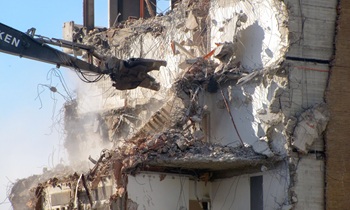
Tracking upfront embodied carbon with digital tools.
ECA welcomes procurement reforms

Public spending must back British jobs and skills.
Campaigning for Edinburgh: the Cockburn Association 1875-2049

The role of the civic voice in protecting character. Book review.

CIOB photography competition is open for entries.
ECA Edmundson apprentice of the year award
Finalists announced.
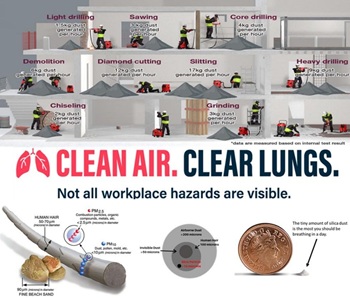
Major new study exposes serious knowledge gaps.

Generating energy from internal light as well as sunshine.

ECA welcomes plans to strengthen subcontractor quality control.

Combining mid-career qualifications with experience broadens career opportunities.

Why being a mentor can help your career.

Channel 4 broadcaster to host 125th anniversary ceremony.
Listed structures on the rail network
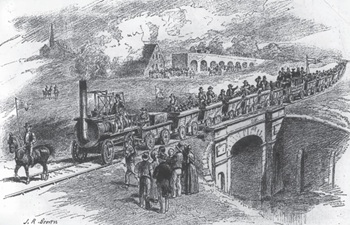
Heritage interests and operational requirements must be balanced.